
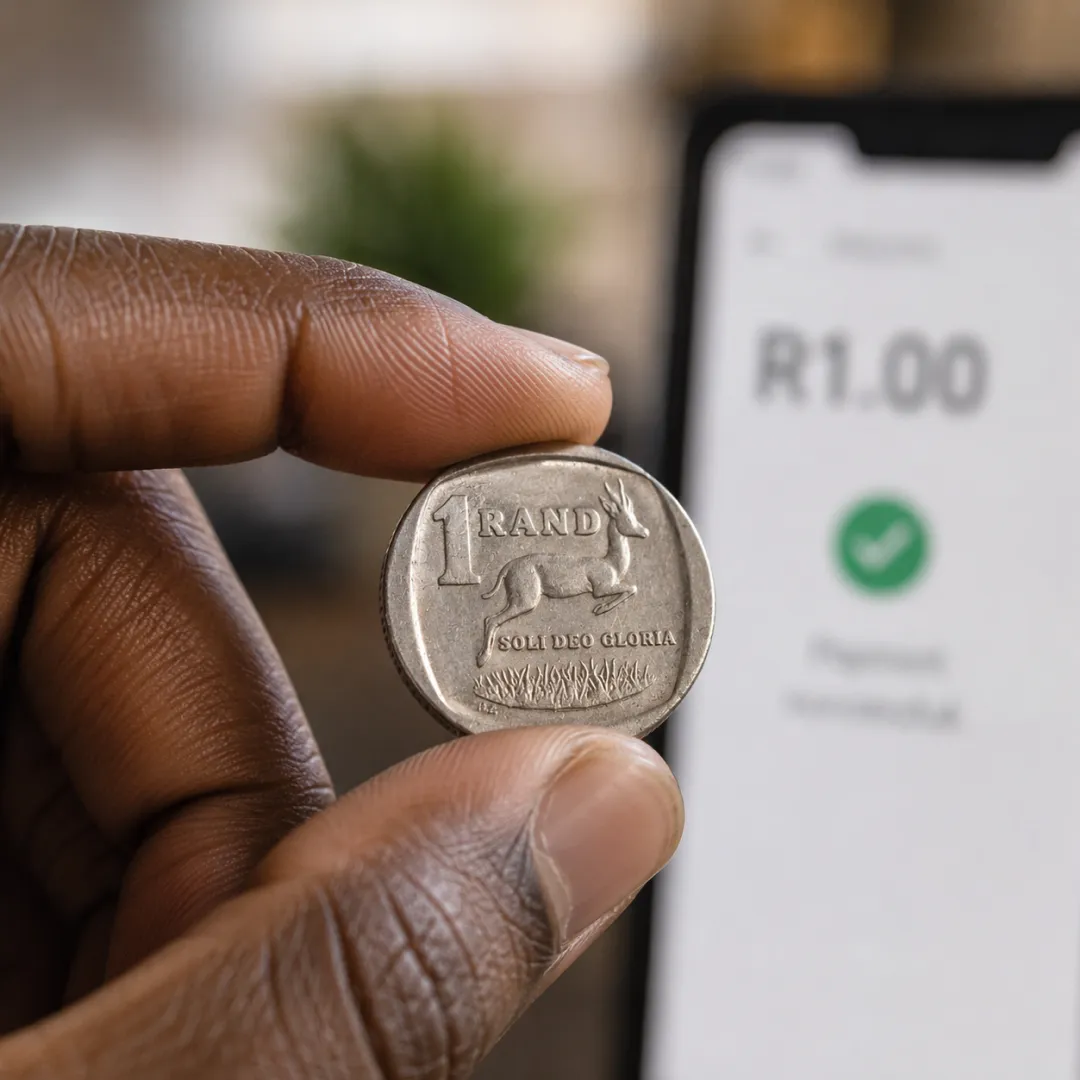
Often, they’re testing whether the product can be trusted. Three questions sit behind a small first payment: will the money get there, are the fees what I expected, and will I know when it’s done? Keeping the amount small caps what they could lose while they find out. Read it as a trust decision in progress, not as low intent.
What is a new user checking with that first payment?
Whether the product does what it promises.
Researchers saw this in the early years of mobile money. Olga Morawczynski’s study of M-PESA in Kenya (opens in a new tab) found that many people put in a small amount first. They added more only after “testing out” the system and seeing that their money was safe.
People still ask these questions because things do go wrong. A 2025 survey of digital finance users in Kenya (opens in a new tab) by Innovations for Poverty Action found that 80% of payment users had sent money to a wrong number at some point, and 68% of them couldn’t get it back. Unclear fees and poor customer care were the problems most strongly linked to lower trust. Surveys by CGAP and IPA (opens in a new tab) found that between 13% and 23% of users in Senegal, Côte d’Ivoire and Nigeria had faced charges they didn’t expect. And 22% of unbanked adults in low- and middle-income countries say they don’t trust financial institutions, according to the World Bank’s Global Findex 2025 (opens in a new tab).
A small amount keeps the cost of finding out low.
Does a small first transaction mean low intent?
Not necessarily. Its size shows what someone did, not why.
Small is relative. It might be the least your product allows, or a fraction of what the same customer sends a month later. The exact amount matters less than the gap between the first payment and the ones that follow.
A small first payment can be a genuinely small need, all the money someone has that day, or a careful first step before they commit more. Your dashboard records all three as the same low-value transaction. Segment on size alone and you may file your most careful new customers under your least valuable.
How can you tell a trust test from a genuinely small payment?
Look at what happens next, not only at the first amount.
- Does the customer come back, and how soon?
- Is the second payment larger than the first?
- What do they ask support, or tell you in research, around that first payment?
A quick second payment that’s larger than the first suggests the test passed. A customer who never comes back may have found something in the test that put them off.
How do you design a first payment people trust?
Answer the questions they’re testing, at the moment they ask them.
- Before they pay: the full cost, including fees and any exchange rate.
- While it’s in progress: where the money is, in plain words.
- Once it’s done: what happened, and what to do if something went wrong.
A question for your next roadmap review: how do your analytics treat a customer whose first payment is the least your product allows, and what happens to them next? It’s one of the assumptions that break in emerging markets: a small payment is a trust test.
Other questions we hear
What is a trust-test transaction?
A trust-test transaction is a small payment a new customer makes mainly to check that a financial product works as promised, before they trust it with more money. The amount is kept low on purpose, so little is lost if something goes wrong.
What should a first-payment confirmation show?
It should confirm what the customer was checking for: the amount sent, the amount received, the fees and any exchange rate, the status of the payment and when it will arrive, a reference, and what to do if something goes wrong.
Each of those answers a question a cautious first-time user is already asking.
Should fintech teams push new users towards a larger first payment?
Not at the cost of the test. A small first amount is the safety net a cautious customer relies on, and pushing for more can remove the reason they felt able to try at all.
Make the small payment easy and reassuring, then make the next, larger payment feel like a safe step.
Which fintech products see trust-test payments?
Any product where money moves for the first time: remittances, mobile wallets, payments and investment apps. It’s most likely when the brand is unfamiliar to the customer, or when they’ve been let down by a financial service before.
Sources
- University of Edinburgh (2010). Examining the adoption, usage and outcomes of mobile money services: the case of M-PESA in Kenya (PhD thesis, Olga Morawczynski) (opens in a new tab)
- Innovations for Poverty Action (2025). Financial Consumer Protection Survey: Kenya 2025 (opens in a new tab)
- CGAP (2025). Findex 2025: Why Financial Inclusion Needs to be More Responsible (opens in a new tab)
- World Bank (2025). The Global Findex Database 2025 (opens in a new tab)